
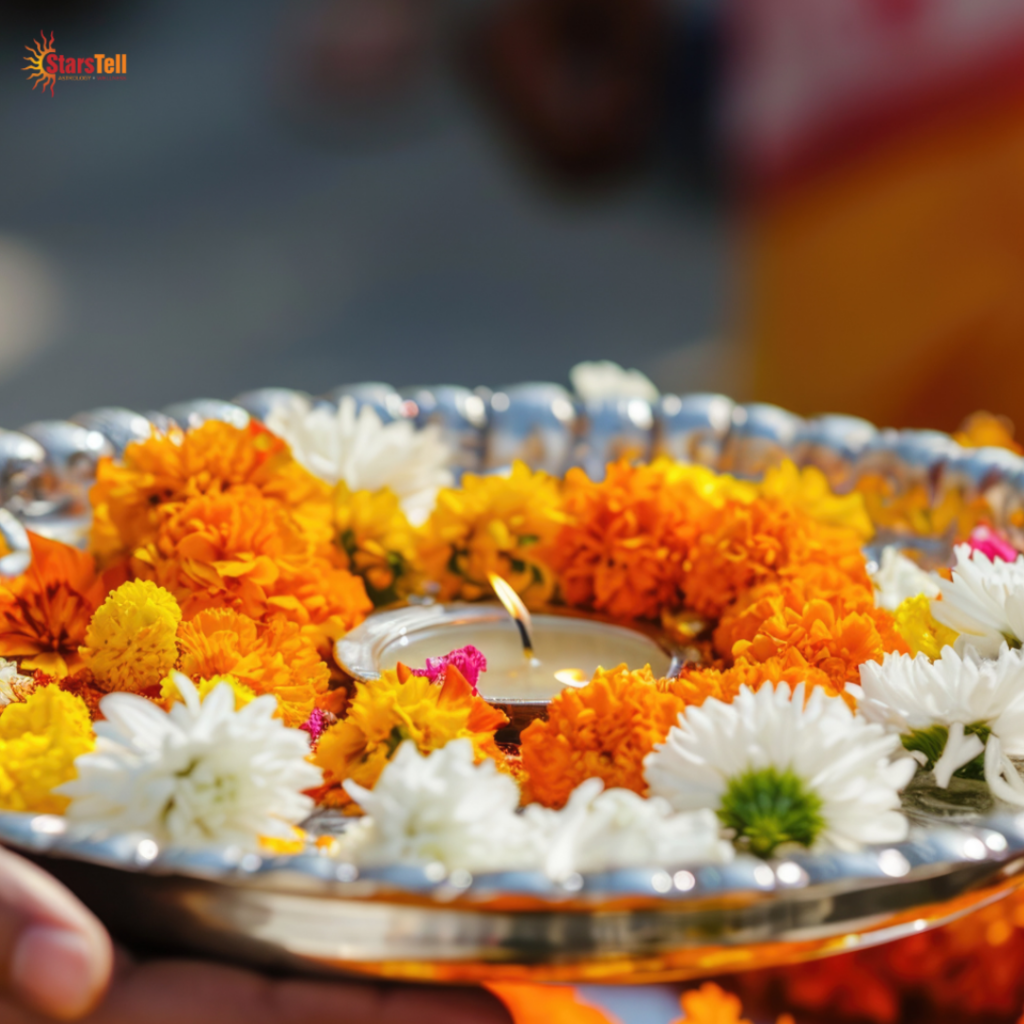
According to Hinduism, the Ekadashi fast is considered to be of immense significance. There are 24 Ekadashis throughout the year, with two occurring in every month, one during the Shukla Paksha (waxing phase of the moon) and the other during the Krishna Paksha (waning phase). There is a prescribed tradition for observing a ritualistic fast and performing worship on this day. On this occasion, Lord Vishnu is worshipped.
The Ekadashi falling during the Shukla Paksha in the month of May, specifically during ‘Adhikmas’ (the intercalary month), is known as Padmini Ekadashi. It is believed that any individual who observes a fast and performs worship on this day attains Moksha (salvation). This practice not only alleviates suffering but also removes obstacles encountered in one’s endeavours. First, let us understand what Adhikmas is.
What is Adhikmas?
According to the Hindu Panchang (calendar), an extra month occurs every three years; this month is known as Adhikmas. During this month, various religious activities and rituals are performed, most notably the worship of Lord Vishnu. It is also referred to as Malmas, and it is set to commence on May 26th.
How did Adhikmas come to be named Purushottam Mas?
According to the scriptures, Adhikmas is called Purushottam Mas because, during this month, Lord Vishnu is worshipped with full rites and rituals. Through this worship, one can alleviate all the sorrows and afflictions in one’s life. There is a mythological legend behind why Adhikmas is designated as Purushottam Mas.
According to these legends, this particular month was once a period that lacked any presiding deity or master. Consequently, it came to be regarded as an “abandoned” or inauspicious month. It was viewed with neglect, and people began to hesitate—even refuse—to undertake any auspicious activities during this time. Witnessing this situation, Lord Vishnu became deeply concerned.
Understanding the distress associated with this month, He took it under His divine protection and bestowed upon it the name Purushottam Mas. It is believed that any individual who engages in Japa (chanting), Tapa (penance), and Daan (charity) during this period accrues immense spiritual merit.
When is Padmini Ekadashi in 2026?
According to the Vedic Panchang, the Ekadashi Tithi of the Shukla Paksha, occurring during the Adhik Maas (intercalary month) in May, will commence on May 26 at 5:11 AM. It will conclude the following day, May 27, at 6:22 AM. To alleviate suffering and attain spiritual merit, the Padmini Ekadashi fast will be observed on Wednesday, May 27, 2026. The breaking of this fast (Parana) may be performed the following morning, May 28, between 5:45 AM and 7:57 AM.
Padmini Ekadashi Fast Story
In the Treta Yuga, there reigned a ruler named King Kritavirya, who had many queens. Yet, despite the passage of many years, they remained unable to conceive a son. Consequently, the King became deeply distressed. Driven by this anguish, the King, accompanied by his queens, retreated into the forests, where he undertook rigorous penance to propitiate the Divine.
After performing ascetic austerities day and night in the wilderness, the King’s body was reduced to mere skin and bones. In their despair, the queens approached Mother Anasuya; acting upon her counsel, they resolved to observe a fast on the Ekadashi of the *Shukla Paksha* (waxing phase of the moon) during the Adhikamas (intercalary month).
It is said that the Queen observed the Padmini Ekadashi fast with the utmost devotion and in strict accordance with all prescribed rituals. Upon the conclusion of the fast, Lord Vishnu appeared before them and bade them ask for a boon. Overjoyed, the Queen humbly submitted, “O Lord, if You are truly pleased with my devotion, then grant the fruit of this penance to my husband.”
Thereupon, the King petitioned the Lord for the boon of a son. He prayed, “Grant me a son who is endowed with every virtue and whose renown shall spread across all three worlds.” Lord Vishnu replied, “So be it” (Tathastu), and shortly thereafter, a son was born into their royal household.
Sometime later, the Queen gave birth to a son who came to be known as Kartavirya Arjuna, a king of immense valor and might. It is widely believed that, through his extraordinary prowess, he even succeeded in taking Ravana captive. His fame and glory spread throughout all three realms.
Eventually, he was slain by Parashurama, an avatar of Lord Shri Hari Vishnu himself.
Padmini Ekadashi Worship Procedure (Pooja vidhi)
- First, wake up early in the morning, take a bath, and, holding water in your hands, take a solemn vow to observe the fast.
- Next, spread a yellow cloth and place the idols of Lord Vishnu and Goddess Lakshmi upon it.
- Offer yellow flowers, Akshat (sacred rice grains), and sandalwood paste to the deities.
- Light an Akhand Jyot (eternal flame) and offer a lamp (Deep dan) near a Peepal tree.
- Listen to the sacred story (Vrat Katha) associated with Ekadashi, chant mantras, and perform the Aarti (ritual lamp ceremony), an act considered highly auspicious.
On this day, in addition to observing the fast, acts of penance (Tapa), chanting (Japa), and charity (Dan) hold special significance; performing these acts is believed to bestow the spiritual merit accumulated over many lifetimes.
