
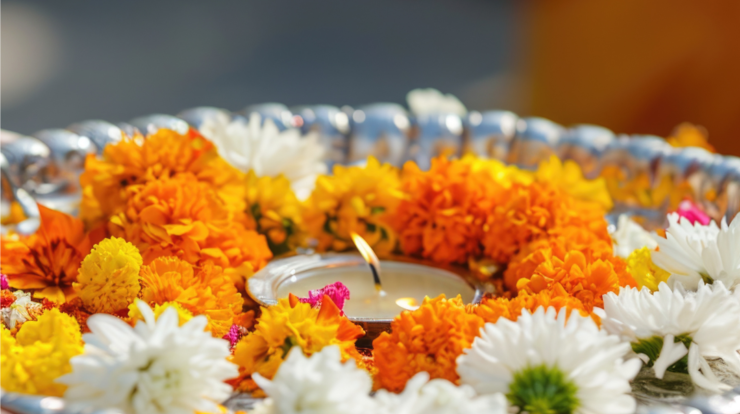
The day begins with the worship of God. This puja is performed with full rituals. In addition to a lamp, incense sticks, and other items, flowers are also offered to God on a plate. Although flowers and other items are offered to deities on different days, depending on the deities they worship. It is important to note that not all types of flowers are appropriate during puja. That is, some flowers should not be included in the puja.
First, let’s understand how to offer flowers.
Colourful flowers are offered to express one’s faith in God. Garlands of roses and marigolds are commonly offered. However, these flowers should not be washed before being used for puja, as this destroys their purity. It is believed that fruits become offerings to the water god upon touching water. It is believed that flowers should only be included in the plucked puja after bathing. It should also be ensured that the flowers are fresh.
Never use dried, old, or wilted flowers for worship. Also, avoid using flowers that have insects in them. Also, avoid smelling the flowers used for offering to God. This makes the flowers impure.
Avoid Including These Flowers in Worship
- Ketaki Flowers
Lord Shiva loves belpatra, dhatura, aak, and white flowers, which are offered to him during worship. However, ketaki flowers should not be included in his worship. According to Mythology, the Ketaki fruit once supported falsehood. Lord Shiva cursed these flowers, saying they would not be accepted in worship. Consequently, Ketaki flowers are prohibited from worship.
- Agastya Flowers
Agastya flowers have antibacterial and anti-inflammatory properties, which prove extremely beneficial for the skin. However, these flowers are not offered in the worship of Lord Vishnu. It is believed that offering them reduces the merit of the worship and displeases the Lord.
- Kaner Flower
The Kaner flower, while rich in medicinal properties, is toxic in nature. It is considered inauspicious in worship. Due to its toxicity, it is prohibited from being used in rituals. Therefore, offering this flower during the worship of Lord Rama, the embodiment of dignity, is considered taboo. Marigold, rose, lotus, and basil leaves can be offered instead.
- Madar Flowers
Worshiping Goddess Parvati brings happiness and prosperity to the home. Palash, Bela, and white flowers are offered during her worship. However, Madar flowers are not used in her worship. It is believed that this displeases Goddess Parvati and diminishes the benefits of the worship. These flowers should especially be avoided during Navratri. Furthermore, Amla (Indian gooseberry) is also considered inappropriate during worship.
- Avoid offering Bilva (a type of fruit)
Water is offered to the Sun God daily to worship him. However, offering Belpatra (a type of leaf of the tree) or Bilva (a type of fruit) should be avoided during his worship. It is believed that this will anger Lord Surya and prevent devotees from attaining the full benefits of the offering.
- Lotus Flower
When worshipping Hanuman, avoid offering him lotus and kevada flowers. Hanuman is considered a great devotee of Lord Rama. Offering red and yellow flowers is considered auspicious. Roses, marigolds, and jasmine flowers should be offered to him. Yellow and red flowers are especially preferred in his worship.
Know more about pooja vidhis, rituals and more! Talk to our Astrologer now
For more, find us on Instagram.
